Field Notes / Land
Nine Plots, 459 Species
Volunteers counted what came back on nine plots of former grazing land. Through a summer of heatwaves and drought, the numbers went up.
Take land out of animal agriculture and nature does not wait politely for an invitation. It moves back in, fast.
The Vegan Land Movement buys plots of grazing land in the UK and takes them out of production. Every year volunteers walk those plots and count what lives there. The 2026 survey covered nine plots, some of them under recovery for several years, some newly secured and being recorded for the first time so there is a baseline to measure against later.
The year was not kind to it. Summer brought severe heatwaves and drought. The numbers went up anyway.
What the count found
- Fauna species rose 11.9% against the 2025 count.
- Flora species rose 16.8% across the sites.
- 236 animal species recorded, including 161 insects, 41 birds, 14 arachnids, 9 mammals, 8 molluscs, and 2 reptiles.
- 223 plant species documented.
That is 459 species on land whose previous job was growing one crop of grass for livestock to eat.
The residents worth naming
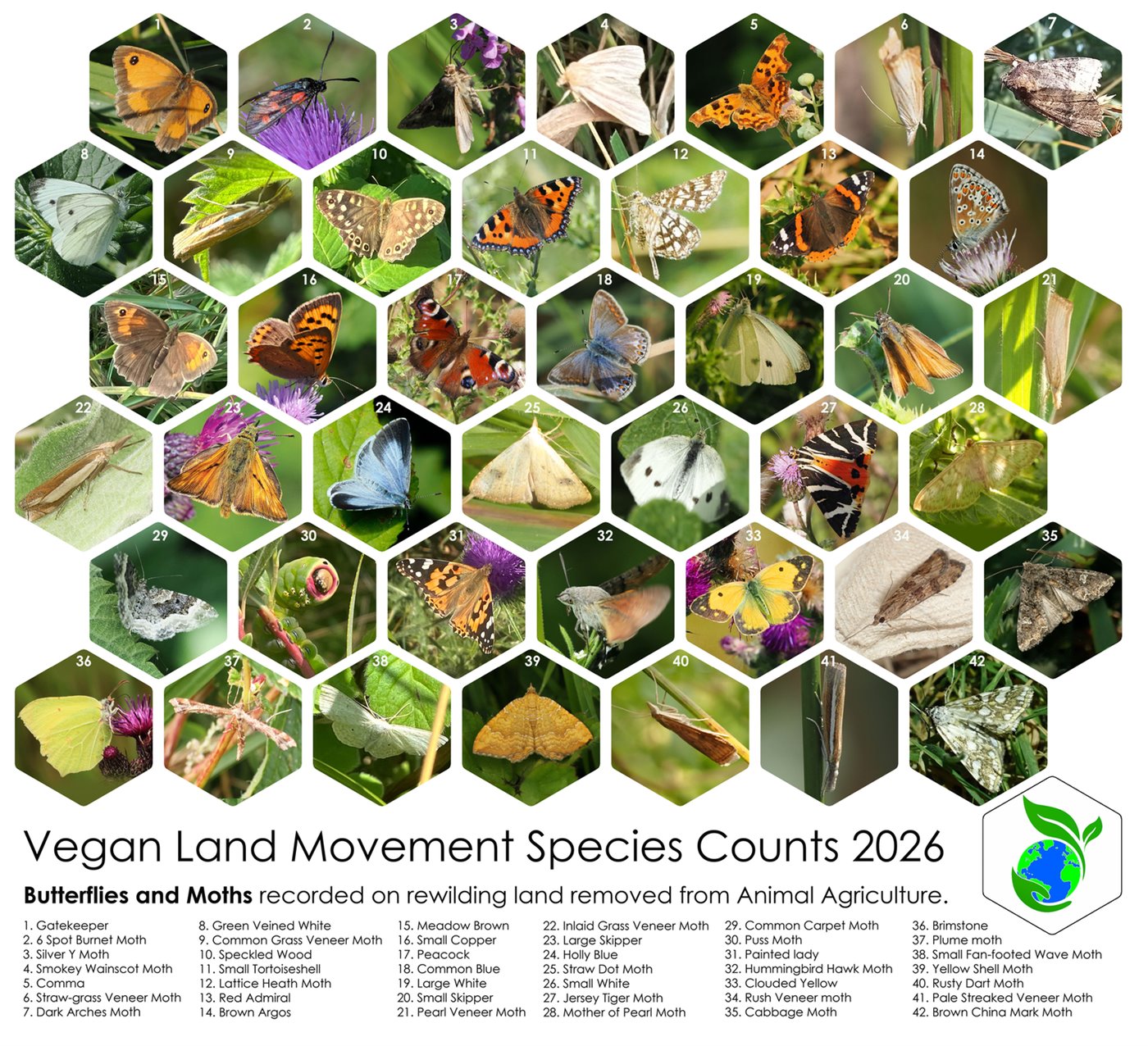
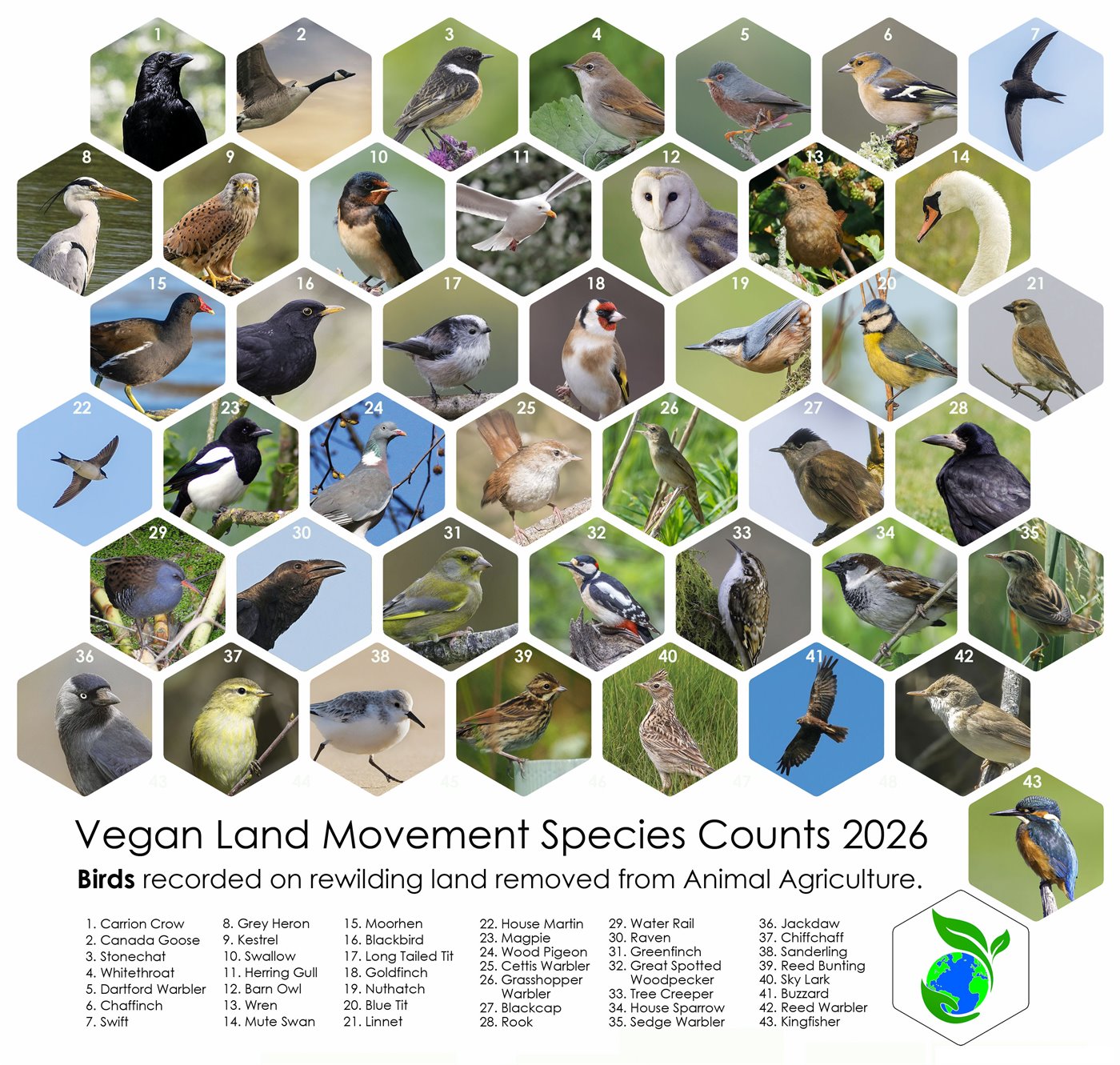
Some of what turned up carries a conservation status. These are not species that pass through anywhere. They arrive where the habitat can hold them.
The Dartford Warbler is the one that stays with me. It did not arrive because the plot was advertised. It arrived because its own habitat burned and this was somewhere left to go. Recovered land is not only a nice outcome for wildlife. It is the spare capacity the rest of the countryside no longer has.
The chain, in order
None of this is complicated. It runs in a sequence, and every step depends on the one above it.
- 01Livestock come offThe constant cropping and trampling ends.
- 02Native plants regenerateSeed already in the soil gets a season to finish.
- 03The soil keeps its structureUncompacted ground holds water and air. Roots go deeper.
- 04Microhabitats formLong grass, scrub, wet ditches, bare patches. Different creatures need different corners.
- 05Insects return161 species this year, the bulk of everything counted.
- 06Birds and small mammals followThe insects and rodents are the reason they come.
You can watch the last step happen on individual plots. Native willows planted on Plot 6 now shelter reed buntings and puss moth caterpillars. Barn owls patrol Plot 8, drawn there by the rodent population living in re-established grassland. The owl is downstream of the grass.
Living proof, which is the useful part
Arguments about land use tend to run on projections. What a hectare could hold. What a diet would free up. Modelled, contested, and easy to wave away.
A species count is not a projection. Volunteers walked nine real plots and wrote down what was there, in a drought year, and the total was higher than last year's. Degraded soil recovers when the pressure comes off and it is given time. That is now a measurement rather than a claim.
The Vegan Land Movement runs on donations, and every plot bought is one taken out of production permanently. You can back the land buyout directly or get involved with the work, including the counts themselves.